Vaccine FAQs
Answers from Hawaii’s Doctors
Can I get the COVID and flu vaccines at the same time?
Should I get vaccinated if I had COVID?
Are vaccines safe for Native Hawaiians and Pacific Islanders?
How do I know that the vaccine is right for me?
How bad are the side effects of COVID-19 vaccination?
Review common questions about COVID-19 vaccines in Hawai‘i.
How Hawai‘i is making the vaccine available to its communities.
Hawai‘i COVID-19 Vaccination Questions
Who is currently eligible to receive a COVID-19 vaccine and booster in Hawai‘i?
All Hawai‘i residents age 5 and above are eligible for the COVID-19 vaccine. The vaccine is not available for children age 4 and younger. However, more studies are underway and being reviewed to safely expand the eligibility for the vaccine.
The Hawai‘i Department of Health is following CDC and FDA recommendations for use of the Pfizer-BioNTech vaccine for those age 5 and older. The Moderna and Johnson & Johnson vaccines are available to those age 18 and older.
The initial vaccine series should have priority over any booster doses. The best way to protect Hawai‘i families and communities is to ensure that unvaccinated Hawai‘i residents complete their primary vaccine series. Moderately or severely immunocompromised 5–11-year-olds should receive a third dose of the Pfizer-BioNTech vaccine 28 days after their second shot, go here for information on vaccines for those with weakened immune systems.
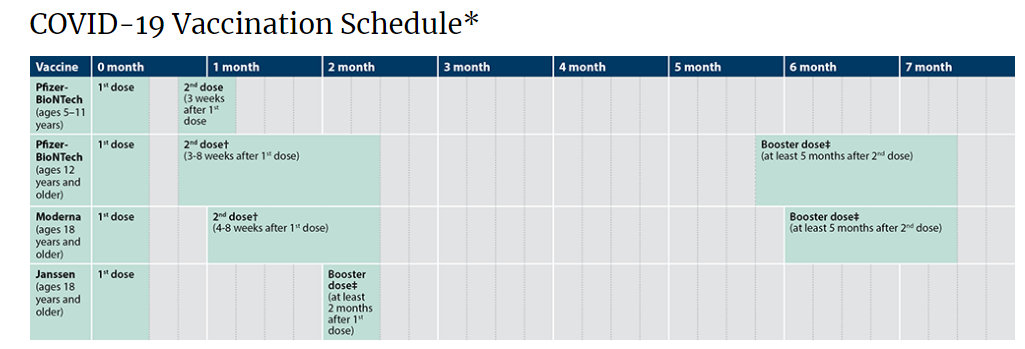
Moderna: A single booster dose is recommended for all Hawai‘i residents age 18+. Adults must have completed their primary Moderna vaccinations at least five months before the booster dose.
Pfizer-BioNTech: A single booster dose is recommended for all Hawai‘i residents age 12+. Individuals must have completed their primary Pfizer vaccinations at least five months before the booster dose.
Johnson & Johnson: A booster dose is recommended for individuals age 18 and older who received the vaccine at least two months ago. The CDC recommends that most people who received the Johnson & Johnson vaccine get a booster dose of either Moderna or Pfizer mRNA COVID-19 vaccines.
Go here for more information about boosters.
Where can I get vaccinated? How do I register or make an appointment?
Every county has vaccine providers working with most hospitals, pharmacies, and district health offices so there’s no need to travel to another island to receive your vaccine. For vaccine registration, select the appropriate county tab at HawaiiCOVID19.com/vaccine/.
Do I have to pay to receive a COVID-19 vaccine?
No, you do not pay for the COVID-19 vaccine. The vaccines are provided for free, but vaccine providers may request insurance information to reimburse costs of setting up vaccination clinics and administering shots. Check with your insurance provider as most (including Medicare and Medicaid) cover COVID-19 vaccination.
My parents are up to date on their COVID-19 vaccines, but my partner and children are not. Is it okay for my family and me to visit them?
If you and your family do not have a high-risk of getting COVID-19 (i.e. spend time in crowded places, places where people can’t mask, around COVID-19 patients), there is minimal risk to visit your family members who are up to date on their COVID-19 vaccines. CDC recommends that people who are up to date on their COVID-19 vaccines continue to take precautions when in public, when visiting with unvaccinated people from multiple households, and in the presence of unvaccinated people who are at high risk of getting severely ill from COVID-19. Such preventions include frequent hand washing, mask wearing, and maintaining a distance of six feet from others whenever possible.
Are COVID-19 vaccines approved?
The Moderna vaccine, Spikevax, is fully approved by the U.S. Food & Drug Administration (FDA) for those age 18 and older. The Pfizer-BioNTech vaccine, called Comirnaty (COVID-19 Vaccine mRNA), is fully approved by the FDA for those age 16 and older. The Johnson & Johnson vaccine is authorized for use in Hawai‘i after rigorous testing involving large clinical trials and data review by a safety monitoring board. Learn more about COVID-19 safety protocols from the Centers for Disease Control and Prevention (CDC).
What is Comirnaty?
Comirnaty (koe-mir’-na-tee) is the first COVID-19 vaccine approved by the FDA and was known as the Pfizer-BioNTech COVID-19 Vaccine. Comirnaty is approved for those age 16 and older. For those age 5 and older, the emergency use authorization remains in effect for the Pfizer-BioNTech COVID-19 Vaccine.
What is Spikevax?
Spikevax is a COVID-19 vaccine approved by the FDA and was known as the Moderna COVID-19 Vaccine. Spikevax is approved for those age 18 and older. A single booster dose of Spikevax is also available at least five months after completing a primary series of the vaccine.
How is Hawai‘i distributing the vaccine for booster doses?
First and second doses should have priority over any booster doses. The best way to protect Hawai‘i families and communities is to ensure that unvaccinated Hawai‘i residents complete their primary vaccine series.
Moderna: A single booster dose is recommended for all Hawai‘i residents age 18+. Adults must have completed their primary Moderna or Pfizer vaccinations at least five months before the booster dose.
Pfizer: A single booster dose is recommended for all Hawai‘i residents age 12+. Individuals must have completed their primary Moderna or Pfizer vaccinations at least five months before the booster dose.
Johnson & Johnson: A booster dose is recommended for individuals age 18 and older who received the vaccine at least two months ago. The CDC recommends that most people who received the Johnson & Johnson vaccine get a booster dose of either Moderna or Comirnaty (formerly known as Pfizer) mRNA COVID-19 vaccines.
Moderately or severely immunocompromised people age 5 and older who received an additional primary dose from Pfizer should get a booster dose at least five months after completing their third dose.
Hawai‘i submitted its vaccination plan to the Centers for Disease Control and Prevention (CDC) on October 16, 2020. The initial draft document has been updated with changes based on new guidance on vaccine allocation and prioritization from the CDC’s Advisory Committee on Immunization Practices (ACIP) issued in December 2020. An executive summary of the updated plan provides details on the robust operational structure and framework for the vaccination plan to reach high-risk groups as quickly and efficiently as possible. You can read the executive summary of the vaccination plan here.
What are the benefits of getting a booster shot?
Boosters are common for many vaccines. COVID-19 vaccine boosters increase protection against COVID-19 and helps reduce the transmission to others.
All U.S.-approved COVID-19 vaccines are effective in reducing the risk of severe disease, hospitalization, and death, even against new variants. Click here to view data from the CDC that supports the need for a booster shot.
Can monoclonal antibody treatment for COVID-19 replace getting a vaccine?
No, monoclonal antibody (mAb) treatment is for those with high-risk and mild-to-moderate COVID-19. mAb have been shown in trials to reduce mortality by about 60-70% in high-risk patients that do not require hospitalization or supplemental oxygen therapy. The protection granted by mAb lasts approximately 90 days. Vaccination is the key to prevention and anyone who has previously received mAb should be vaccinated 90 days after receiving the treatment. Read more on monoclonal antibody treatment.
What to know about vaccinating your keiki or teenager.
For Parents
#1 Should children get the vaccine?
According to the CDC, fewer children have been infected with COVID-19 compared to adults, but children can be infected with the virus, get sick and spread COVID-19 to others. CDC recommends everyone 5 years and older should get a COVID-19 vaccination to help protect against COVID-19. The current vaccine studies include children. Children age 5 and older are eligible for the Pfizer vaccine and a booster dose is also recommended for moderately or severely immunocompromised people age 5 and older. Additional recommendations will be considered as studies conclude.
#2 Which vaccine is approved for children 5 and older? How do we know it’s safe and effective?
Children age 5 and older are eligible for the Pfizer-BioNTech vaccine and additional recommendations will be considered as studies conclude.
COVID-19 vaccines are safe and effective. COVID-19 vaccines have been used under the most intensive safety monitoring in U.S. history, which includes studies in adolescents and children.
Millions of people in the United States have received COVID-19 vaccines to date, and most people have reported only mild side effects after a COVID-19 vaccination. This important vaccine will protect your ‘ohana from getting sick or severely ill with COVID-19 and may help protect your child’s peers and families as well.
#3 How many doses will my child need to get?
The Pfizer-BioNTech COVID-19 vaccine requires two injections given at least 21 days apart to complete the series for children ages 5-11. The second dose can be given three to eight weeks after the first dose, and a booster for children age 12 and older after five months. Immunocompromised children should receive a third dose, 28 days after their second shot. Click here for the CDC’s guidance for intervals between COVID-19 vaccine doses. *Below graph as of 2/25/22.
#4 What are the possible side effects for children?
Your child may have some side effects, which are normal signs that their body is building protection.
On the arm where you got the shot:
- Pain
- Redness
- Swelling
Throughout the rest of your body
- Tiredness
- Headache
- Muscle pain
- Chills
- Fever
- Nausea
These side effects may affect your child’s ability to do daily activities, but they should go away within a few days. Some people have no side effects. Remember that your child will need a second shot of the Pfizer-BioNTech COVID-19 vaccine three to eight weeks after their first shot if they are age 12 and older.
#5 Should I keep my child home from school the day after receiving the vaccine?
If your child is feeling ill, keep them at home. Side effects may affect your child’s ability to do daily activities, but they should go away in a few days. Some people have no side effects.
Ask your child’s healthcare provider for advice on using a non-aspirin pain reliever and other steps you can take at home to comfort your child. It is not recommended you give pain relievers before vaccination for the purpose of trying to prevent side effects.
#6 Is my child at risk of myocarditis after receiving the vaccine?
In a clinical study of 3,082 5 to 11-year-olds, no cases of myocarditis occurred. Myocarditis after vaccination in this population is likely lower than the rates seen in 12 to 15-year-olds. The FDA and CDC have both looked extensively at the data and have determined that the benefits of COVID-19 vaccination outweigh the risks of myocarditis and other rare events after vaccination.
#7 Will I be charged for a COVID-19 vaccine?
The U.S. government is providing vaccines free of charge to all people living in the United States, regardless of their immigration or health insurance status. You may be asked if you have health insurance to cover the administration costs, but it is not required, nor will you be billed any co-pays.
#8 Where can I find a COVID-19 vaccine for my child?
A map of Hawai‘i locations is found on hawaiicovid19.com/vaccine, search vaccines.gov or text your ZIP code to 438829 to find a pharmacy offering Pfizer near you. You can also visit your county’s webpage to view vaccination sites and pop-up clinics offering the Pfizer vaccine or call 1-833-711-0645 for help registering by phone.
What to do before getting vaccinated.
BEFORE Vaccination Questions
Should I receive the vaccine if I have other medical conditions?
Consult with your personal physician in order to decide whether to receive the vaccine. The vaccine trials did include people with medical conditions that place them at higher risk for developing severe COVID-19 disease.
Should pregnant and breastfeeding women receive the vaccine?
The vaccine is recommended for pregnant or breastfeeding/lactating women and no COVID-19 vaccines cause fertility problems in women or men. The American College of Obstetricians and Gynecologists (ACOG) and the Society for Maternal-Fetal Medicine (SMFM), the two leading organizations representing specialists in obstetric care, recommend that all pregnant and breastfeeding individuals be vaccinated against COVID-19. The organizations’ recommendations in support of vaccination during pregnancy reflect evidence demonstrating the safe use of the COVID-19 vaccines during pregnancy from tens of thousands of reporting individuals. Women should discuss with their personal physicians to decide whether to receive the vaccine.
How do we know that these vaccines are safe when they are so new?
Over 432 million doses of COVID-19 vaccine have been given in the United States from December 14, 2020, through November 8, 2021.
COVID-19 vaccines are safe and effective.
The Comirnaty (COVID-19 Vaccine mRNA) vaccine was approved by the Food and Drug Administration after results from 44,000 clinical trials. The Spikevax vaccine was approved by the FDA after results from more than 30,000 recipients. Bringing a new vaccine to the public involves many steps including vaccine development, clinical trials, U.S. Food and Drug Administration (FDA) authorization or approval, manufacturing, and distribution. Many different public organizations and private companies have worked together to make COVID-19 vaccines available to the public. While COVID-19 vaccines were developed rapidly, all steps have been taken to ensure their safety and effectiveness. No scientific shortcuts were taken. Bringing a new vaccine to the public involves many steps including vaccine development, clinical trials, FDA authorization or approval, manufacturing, and distribution. Many different public organizations and private companies have worked together to make COVID-19 vaccines available to the public. While COVID-19 vaccines were developed rapidly, all steps have been taken to ensure their safety and effectiveness.
Are there any side effects? Can it cause you to get very sick?
Millions of people in the United States have received COVID-19 vaccines. Clinical trials have found that in general, most people do not have serious problems after being vaccinated. Your arm may be sore, red, or warm to the touch. These symptoms usually go away on their own within a few days. Some people report getting a headache or fever after receiving a vaccine. These side effects are signs that your immune system is doing exactly what it is supposed to do. It is working to build protection against disease.
These vaccines have undergone and will continue to undergo the most intensive safety monitoring in U.S. history. If scientists find a connection between a safety issue and a vaccine, FDA and the vaccine manufacturer will work toward an appropriate solution to address the specific safety concern. More on the Safety of COVID-19 Vaccines.
Can COVID-19 mRNA vaccines give me COVID-19?
No. The COVID-19 vaccine cannot give someone COVID-19. mRNA vaccines do not use the live virus that causes COVID-19.
Do the mRNA vaccines permanently alter my DNA?
No, the mRNA vaccines (Moderna and Pfizer) prime your immune response, then leave your system. Your DNA is unaffected.
I already had COVID-19. Is it recommended that I get the vaccine?
Yes. People who have been sick with COVID-19 and who have fully recovered are unlikely to catch it again within the first 90 days after recovery. Still, CDC and Hawai’i Department of Health strongly recommend vaccination even in those who have already had COVID as an extra layer of protection.
Those who tested positive but showed no symptoms may not have created a strong immune response and should be immunized when the vaccine is available.
What you can expect during your vaccination appointment
DURING Vaccination Questions
Will I need to present any documents during my vaccination?
Yes. Appointments and walk-ins should present a Hawai‘i photo ID or Hawai‘i student ID to validate vaccine eligibility. Identification is also needed to complete vaccine registration and initiating the COVID-19 Vaccination Record Card.
What can I expect at the vaccination site?
At the location of your vaccine, you and the healthcare worker will both need to wear masks that cover your nose and mouth. You may also receive a fact sheet that tells you more about the COVID-19 vaccine you are getting.
What do I do when it’s my turn to get the vaccine? How long will my appointment take?
Be prepared to roll up sleeves or bare arms. Healthcare workers will administer vaccines in either your upper left or right arm. The entire process (including check-in and monitoring) should take no more than 30 minutes, please allow for extra time to receive your vaccine.
Can I leave immediately after receiving my vaccine shot?
No. After your shot, you will be directed to a waiting area and monitored on-site for 15-30 minutes for any sign of an allergic reaction.
When will I get my vaccination card? What should I do with my card?
While at your vaccination site, a healthcare worker will complete your COVID-19 Vaccination Record Card displaying what COVID-19 vaccine you received, the date, and the date of your second appointment. For your records, keep this card in a safe place. Consider taking a picture of the card or scanning it for safe keeping.
For safety monitoring, vaccine recipients are encouraged to enroll in v-safe, a smartphone-based tool that uses text messaging and web surveys to provide personalized health check-ins after you receive a COVID-19 vaccination.
Key items to be aware of AFTER you’ve been vaccinated.
POST Vaccination Questions
Will I be allowed to gather with other vaccinated and unvaccinated persons?
You may gather indoors with unvaccinated people from one other household (for example, visiting relatives who all live together) without masks, unless any of those people or anyone they live with has an increased risk for severe illness from COVID-19.
If you have been around someone who has COVID-19, you do not need to stay away from others or get tested unless you have symptoms.
However, if you live in a group setting (like a correctional or detention facility or group home) and are around someone who has COVID-19, you should still stay away from others for 14 days and get tested, 3-5 days after your last contact with the person who has COVID-19 even if you don’t have symptoms.
CDC recommends that people up to date with their vaccinations continue to take precautions when in public, when visiting with unvaccinated people from multiple households, and in the presence of unvaccinated people who are at high risk of getting severely ill from COVID-19. Such precautions include frequent hand washing, mask-wearing, and maintaining a distance of six feet from others wherever possible.
What does it mean to be up to date on your COVID-19 vaccines?
Travelers are considered up to date on the 14th day after the completion of their second vaccine shots of Pfizer or Moderna or one shot of Johnson & Johnson (Click here for vaccines listed for Emergency Use by the World Health Organization and accepted for travel purposes).
How the 14 days are calculated:
• Your last dose must have been given a full 14 days before the day you board your flight to the United States.
• You are considered up to date on the 14th day after the vaccination series was completed. For example, if your last dose was any time on October 1st, then October 15th would be the first day that you meet the 14-day requirement.
If I am up to date on my COVID-19 vaccine, do I need to wear a mask and avoid close contact with others?
Hawaii’s indoor mask mandate will be enforced in each county through March 25, 2022. Masks are still strongly recommended for people over age 65, with compromised immune systems, who care for people at risk of severe illness and those unvaccinated for COVID-19. It’s still advised you wear a mask in large, crowded gatherings.
What if I lost my vaccination card?
If you lost or damaged your COVID Vaccination Record Card and need a replacement, contact the hospital, pharmacy, or community clinic where you received your vaccine. If you were vaccinated in Hawai‘i, find your contact here.
Lost vaccination cards cannot be requested in-person at district health offices. The Department of Health does not have the information needed to issue replacement cards for other vaccination sites such as hospitals, pharmacies or community clinics.
Does immunity after getting COVID-19 last longer than the protection you would get from a COVID-19 vaccine? How long will the vaccine protect people?
The protection someone gains from having an infection (called “natural immunity”) varies from person to person and is difficult to measure. The virus causing COVID-19 is new, so we don’t know how long natural immunity for COVID-19 might last.
How will I report if I have a bad reaction to the vaccine?
CDC and FDA encourage the public to report possible side effects (“adverse events”) through VAERS (Vaccine Adverse Event Reporting System) and V-safe.
You can learn more about how to register and use V-safe at the following website: www.cdc.gov/coronavirus/2019-ncov/vaccines/safety/vsafe.html.
You can learn more about the difference between routine side effects and adverse events at this CDC website: www.cdc.gov/vaccinesafety/ensuringsafety/sideeffects/index.html. You can report an adverse event here Reporting Adverse Events to VAERS | Vaccine Safety | CDC
If I get the vaccine, can I travel to Hawaii?
Any traveler who is up to date on their vaccination against COVID-19 will be eligible for the quarantine exception. This means two shots of Pfizer or Moderna vaccine or one dose of Johnson and Johnson plus 14 days after the last dose (Click here for vaccines listed for Emergency Use by the World Health Organization and accepted by Safe Travels).
Travelers must create an account in Safe Travels Hawai‘i, enter their trip details, upload their vaccination documentation and sign the legal attestations. Travelers will receive a QR code via email once the trip information is submitted. For convenience, the same QR code will be emailed to travelers one day prior to departure.
Travelers who receive a green QR code will be able to get through the verification and processing at the airport quicker. A green QR code means the traveler’s quarantine exception was pre-verified by Safe Travels. Those who use a Trusted Testing and Travel Partner or Health Pass Partner (AZOVA, CLEAR and CommonPass) or Hawaii SMART Health Card would be eligible for a green QR code. Travelers who did not receive a green QR code will be able to get their quarantine exception manually reviewed by airport screeners during the verification process.
Travelers who have a SMART Health Card from their State or provider can obtain the green QR code by using CommonPass to verify their vaccination SMART Health Card, then linking their CommonPass ID in Safe Travels (not for cruise line trips at this time). Check the SMART Health Card website for a list of States and providers who issue SMART Health Cards.
Read the Travel FAQs to get all travel-related requirements.
Read more COVID-19 Vaccine Frequently Asked Questions.
If you have additional questions, call the Hawai’i Department of Health Immunization Branch at (808) 586-8332 or toll-free at (833) 711-0645.
 Mask Guidance